1902-1944 The Early Years
EARLY HISTORY 1902 – 1944
In 1902 the Sisters of Our Lady of the Missions purchased “Riverview” in Tuckfield Street Fremantle, from the American Consul, Mr. Mayhew. It was previously a girl’sboarding school run by the ladies of the Bird family.
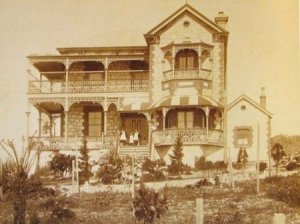
“Riverview”
“Riverview” overlooked the Swan River and the Indian Ocean could be viewed in the distance. A tree-lined drive swept up to the front door of the house and lower down, to the right, there was a coach house and stables. These and a huge Moreton Bay Fig tree were “Riverview’s” distinguishing features for many years.
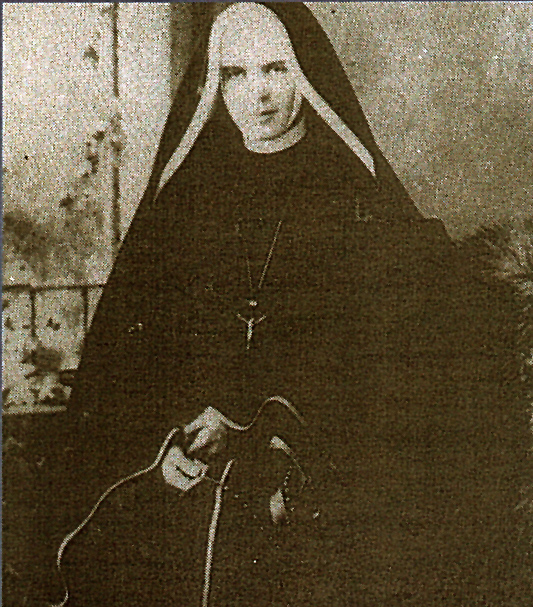
Sr. Irene O’Reilly
Two Sisters, Sr. Irene and Sr. Agnes, began teaching there in February 1902 with an initial enrolment of 5 pupils from Kindergarten to Junior (Yr 10) and “Riverview”, now under the patronage of St Joseph of the Sacred Heart, was blessed by Bishop Gibney on the 22nd of July.
From the outset, great interest was taken in cultural subjects, particularly needlework, painting, and the various branches of music. At the end of the first year, one pupil had passed the Adelaide University Primary Examination & a Gold Medal was won in Theory of Music. Sr. Irene was both teacher and Music teacher.
Among the first pupils taught by the Sisters when the school opened in 1902 was the daughter of C. Y. O’Connor, the Colony’s Engineer-in-Chief and Manager of Railways.
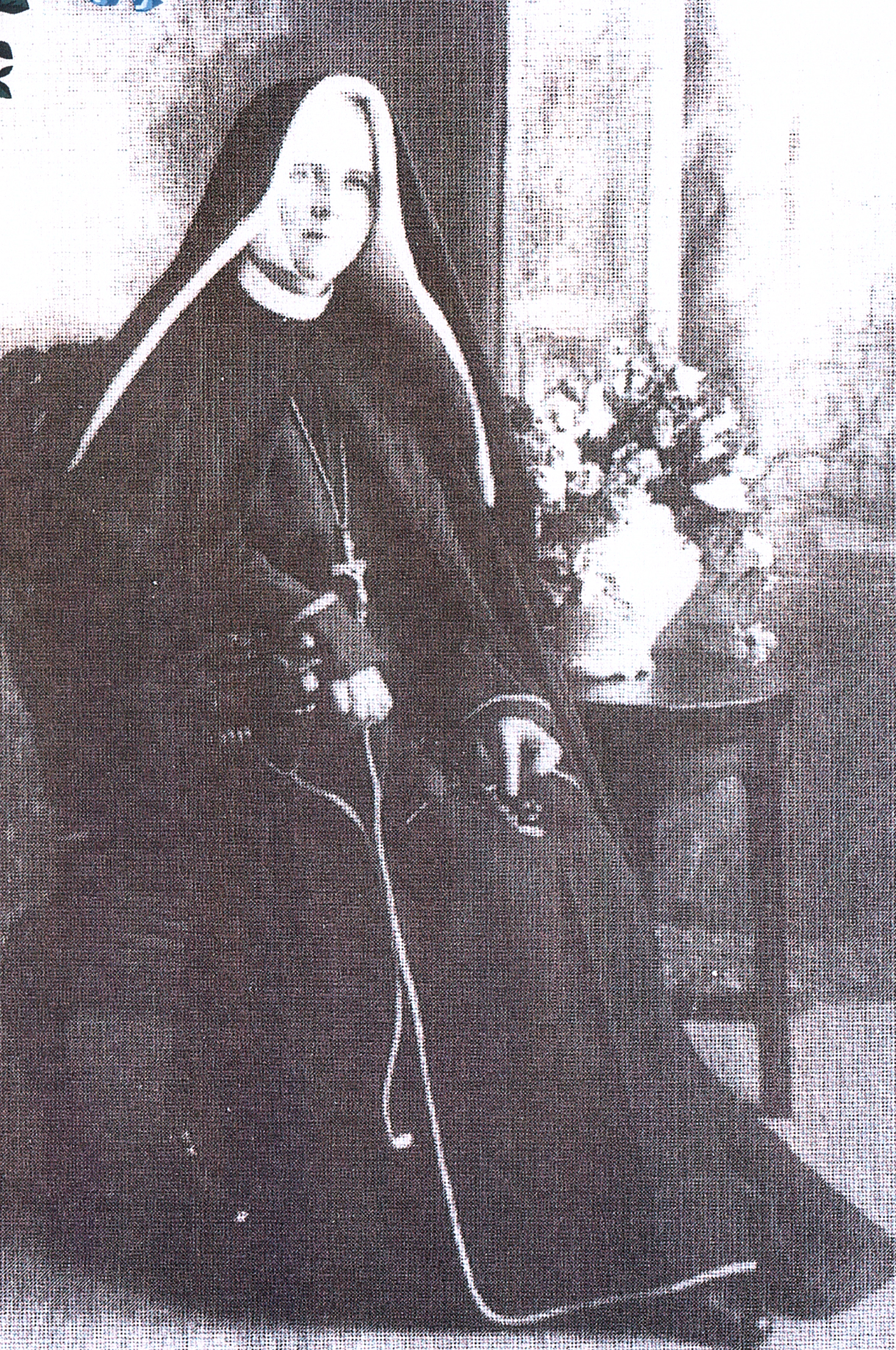
Sr M. Theodora (Elizabeth McFall)
Also among the first pupils when the school opened in 1902 was Elizabeth Lily McFall; born in 1894 and baptised a few days later in St. Patrick’s Church (now Basilica) Fremantle. She later passed her Teacher Qualifying Certificate at Tuckfield St., and entered the congregation in June 1915 where she became known as Sr. M. Theodora.
In 1903 enrolments rose to 33 pupils and in 1904 Sr. M. Victoire arrived from France and joined the teaching staff. Students achieved success in music and an exhibiton of Needlework and painting was held. Also that year the coach house and stables were reconditioned for use as additional classrooms. They were still in use till the late 1920’s.
In 1906 pupil numbers fell from 38 to 26. This was due to the Railway Workshops being transferred to a better site at Midland. Many Fremantle men had been employed but the workshops were poorly sited, too small and under equipped in their Fremantle location. It was C. Y. O’Connor who proposed the more advantageous Midland site. After some years, “Riverview” became inadequate for the needs of the Sisters and a property next door was acquired on 15th March 1921. This was converted into a Convent and the vacated Convent was arranged as a Boarding School.
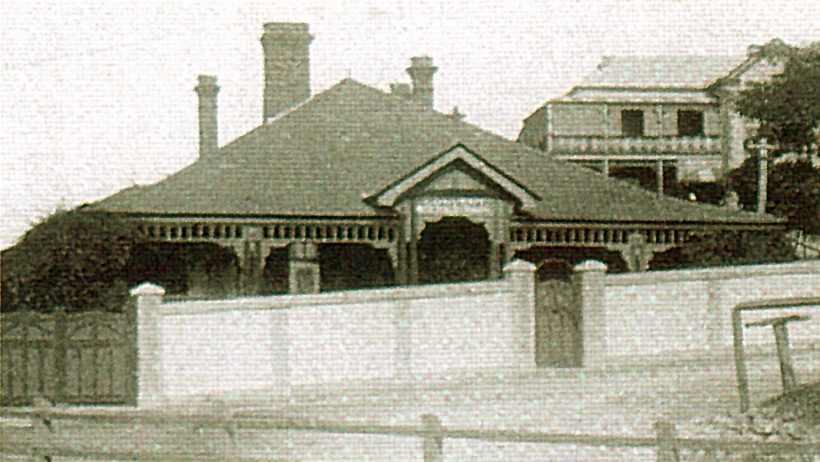 – Tuckfield Street Convent
In 1925 the Fremantle Community was asked to take charge of the school at Palmyra. Every day two Sisters travelled by tram along Canning Highway to this ‘new mission’ until 1952 when the Sisters took up residence at Palmyra.
Religious Holiday School started to be held at the convent in Fremantle during the school holidays, where children mainly from the communities of the market gardeners on the outskirts of Fremantle were prepared for the Sacraments of Penance, Eucharist and Confirmation. In 1938 forty children were confirmed in the Convent Chapel by His Grace, Archbishop Prendiville.
The War Years – The Impact of World War II
In 1942 with the fall of Malaya and Singapore, and the bombing of Darwin, the school in Tuckfield Street was considered to be in a dangerous position, open to attack. Parents began to panic and many wanted to get their children taken to the relative safety of the country. The Bishop ordered closure of the school and 30 students, boarders and day-scholars, were evacuated to the Sisters’ convent in Narrogin.
Mother Provincial decided that for the duration of the war, it would be best to remove the school’s furniture and equipment to the country convents. Imagine packing up after forty years! It had to be done after school each day, as the ‘black-out’ restrictions hampered packing at night. There were cupboards, desks, chairs, school books, blackboards and easels to be packed as well as 4 pianos! Three pianos went to the country and one to Mrs Quinlan in Palmyra. A futher difficulty was to engage a carrier because with all the evacuations they were in high demand, but eventually the Sisters were relieved to see the last of the truck-loads leave for the country.
In 1942 the Convent was requisitioned as a Military Hospital. Mother Mary St. Mathias was asked by military authorities to find accommodation further out in East Fremantle as the Army would be taking over the Convent and Boarding School as a Military Hospital within the week! A suitable abode was found at the 11th hour, quite literally, for it was at about 11pm on the night before the day on which they were to evaculate, that an agreement was reached with a Mrs Gallagher for them to rent her house at 224 Canning Highway. At 9am the next morning, the Military Hospital moved into the Tuckfield Street Convent! All the Sisters’ luggage, furniture and household utensils were stacked in the corridor ready for the military to remove them, however upon arrival at their new home, the Sisters found all their worldy goods had been deposited on the back lawn. It seems the house was already well furnished, and there was no room inside for the Sisters’ belongings. With some re-adjustments they managed to get everyone and everything inside. Eight nuns in a seven-roomed house! Joyfully, the Sisters set aside the lounge room as a little Chapel, and having brought the Tabernacle with them, soon welcomed the Blessed Sacrament into their new home.
Due to the danger of air raids, trenches had been dug for the schools and Convents. On the 10th June 1942 the siren sounded just after Morning Prayer and the children were quickly despatched to the trenches. They were reported as “wonderfully good, despite the fact that the rain was falling and they were getting wet“. Thank God it was a false alarm, and after the all-clear signal had sounded, the children were sent home for a change of dry clothing. On a wry note, the Sisters reported that they too were driven home by the Parish Priest, as they also “were not very edifying spectacles” after an hour’s stay in the mud of the trenches!
The School of Mary Immaculate in King Street, East Fremantle, had been taken over by the Sisters of Our Lady of the Missions in 1937 and it was there that the remnant of pupils from Tuckfield Street went to school during the war. The Sisters went daily by tram, from their temporary acommodation in Canning Highway, to the schools in East Fremantle and Palmyra. During all this time high educational standards were maintained.
In 1943 the King Street school recorded passes with credit and honours in the University Music and Art of Speech. All students who undertook the Newton Business College Exams passed with merit or honours.
Many other achievements were recorded noting student progress and awards at St. Joseph of the Sacred Heart, Tuckfield Street, Fremantle.
 Sacred Heart/Our Lady of the Missions School Fremantle
Jun 15, 2015 @ 16:19:18
My mother received a silver medal at St Joseph’s Fremantle in 1915 with QS engraved on it and I understood it was to do with hand writing. Does anyone know what QS related to please. Sylvia
Jul 27, 2021 @ 20:42:00
My twin brother and I would walk from the King Street convert to the Tuckfield Street convert to pick up the sisters cases and carry them to the King Street convert in the morning. We lived in Petra Street and would catch the tram from Petra Street to King Street. The conductor on the tram Les Friday (snr/dec) would call heads or tails with us in respect of our penny fare. If we won we did not pay whereas if we lost a penny fare was paid.